Remotion Alternatives
Remotion vs Shotstack
Remotion is a great way to build videos with code. But when it's time to ship at scale, you need infrastructure, not just a rendering engine you have to configure yourself.
Start for Free
Remotion is a great way to build videos with code. But when it's time to ship at scale, you need infrastructure, not just a rendering engine you have to configure yourself.
Start for FreeOver 20,000 Businesses & Developers from 119 Countries Trust Shotstack






Remotion is an open-source React framework that lets you write videos the same way you write UI. That's a genuinely clever idea. But Remotion's job ends at the render. You're responsible for choosing and configuring a cloud rendering setup, managing concurrency, and keeping costs predictable as volume grows.
Shotstack is the infrastructure layer Remotion doesn't provide. Send a JSON payload to our API, get a video back. No infrastructure to configure, no surprise bills. Just rendered video at whatever volume your product needs.

Note: Features and pricing last confirmed on publish date and may be subject to change.
Use the following table to compare features and pricing to see which platform is best for you:
| Feature | Shotstack | Remotion |
|---|---|---|
| Architecture | Managed REST API | Open-source React framework |
| Cloud rendering | Built-in | Multiple options, each self-configured |
| Language support | Any (REST API) | React / JavaScript only |
| Pricing model | Subscription + pay-as-you-go | Free for individuals; from $25/seat/month for companies |
| Rendering speed | ~10x faster than competitors | Depends on your setup |
| Scale | Automatic | You manage concurrency |
| Video hosting & delivery | Handled for you | You host and serve it |
| Use your own storage (source & output) | Native: S3, Google Cloud Storage, Mux | Build it yourself |
| Uptime SLA | ✓ 99.9% | Self-managed |
| White-label editor | Full SDK | ✕ |
| MCP / LLM integration | ✓ Native MCP/CLI server | No native MCP server |
| 4K support | Yes, no extra cost | Yes |
| Template-based workflow | Yes (Studio + JSON) | Code-only |
As millions of users interact with these types campaigns we were going to have to render thousands videos every minute. It quickly became apparent that this type of volume was no issue for Shotstack at all.
Every row in the table above has a real cost: in time, money, or engineering complexity. Where Remotion hands you a just rendering engine and leaves the rest to you, Shotstack runs the whole pipeline. That way, scaling video is a line item, not a roadmap.
Remotion gives you a rendering engine. It doesn't host the finished videos, it doesn't absorb the per-render cost, and it doesn't stay up when traffic spikes. Serving, paying for, and self-managing that pipeline is still on you.
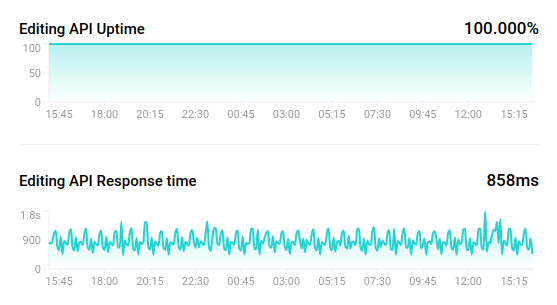
Shotstack runs all of it as a managed service: reliability, speed, and scale, backed by a 99.9% uptime SLA and industry-leading render speeds.
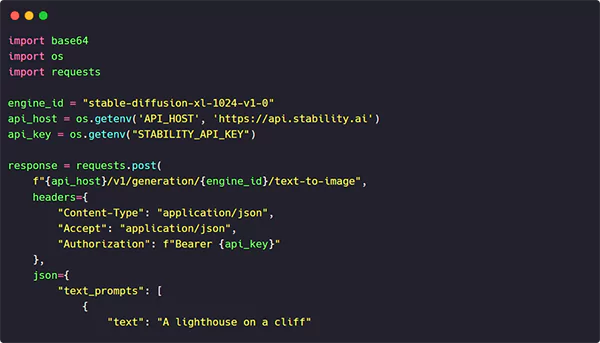
Shotstack is a REST API with native SDKs in Node.js, Python, PHP, and Ruby. All you need is an HTTP request to render a video.
Remotion is built around React components. If your team works in any other language, adding Remotion means adding React to your stack.
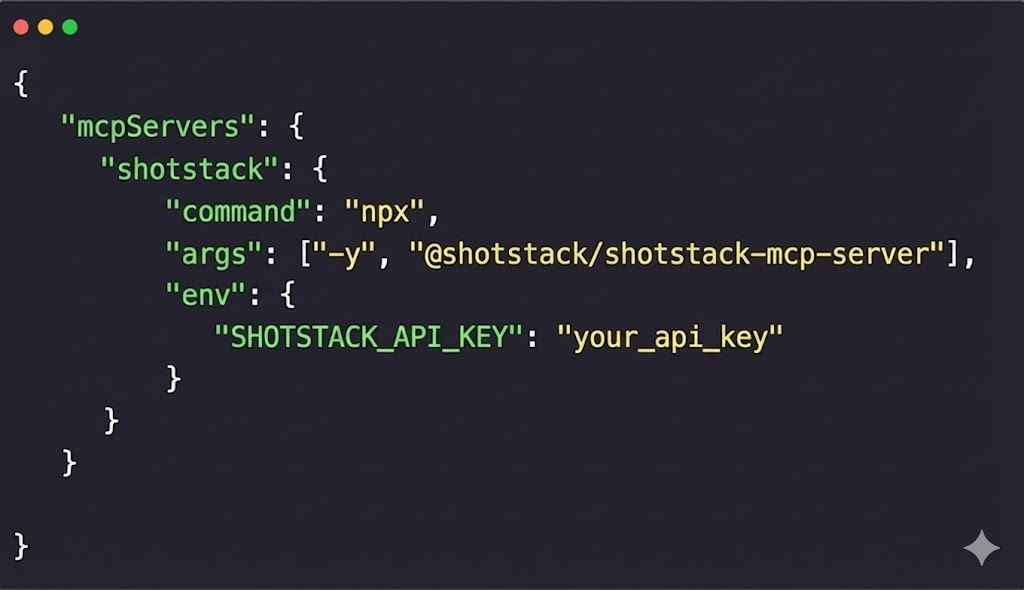
Shotstack ships with a native MCP server, giving Claude, Cursor, ChatGPT, Windsurf, and Copilot direct access to a production-ready video API. No local setup. Describe what you want, get a rendered video back.
Using Remotion with Claude or Cursor still requires a local environment, a running dev server, and an npm install before your AI agent can do anything useful.
Shotstack charges a flat rate per rendered minute with no separate licensing fee. 4K costs the same as 720p at industry leading rendering speeds.
Remotion is free for individuals. For companies, licensing starts at $25 per seat per month for the Creator tier, or $0.01 per render (minimum $100/month) for the Automators tier. If you're using self-hosted cloud rendering on top of that, add infrastructure costs.

We built an open-source Studio SDK to give you a fully functional, embeddable video editor that looks and feels like the rest of your product.
Drop it into your frontend, pass it a template, and your users can edit directly inside your app with Shotstack running everything for you behind the scenes.

This application is the perfect example of a well executed and documented API. In less than 10 mins, set up, web hook done, and first render!
There are a couple of other options out there that attempt to provide the same or similar solution, but none of them come close in terms of quality, ease of use, and speed.
Shotstack was EXACTLY what I was looking for, and incredibly easy to get started with. You guys are killing it.
The two tools solve the same problem differently: Remotion uses React components, Shotstack uses a JSON timeline API. The migration is mainly a translation exercise. The rendering infrastructure disappears entirely.
Need help planning the migration? Reach out and get expert guidance →
Not exactly. Remotion lets you define video using React components; Shotstack uses a JSON timeline schema. If you're moving from Remotion, you'll rewrite your templates, but you'll gain a fully managed API, multi-language support, and no infrastructure to maintain. Most teams make the switch when they need to scale and need managed infrastructure.
Shotstack supports layered timelines, chroma key, audio mixing, transitions, dynamic text, and 4K output. It doesn't use React components as the creative primitive, but for the majority of production video use cases, the JSON API covers everything Remotion's React model does and more, without the infrastructure complexity.
Shotstack ships with a native MCP server, which gives Claude, Cursor, Windsurf, ChatGPT, and other AI tools direct access to the video API. You can describe a video in natural language and get a rendered output back without writing a single line of code or running a local environment.
No. Shotstack is fully managed: there's no AWS account to set up, no Lambda to configure, and no rendering infrastructure to provision or scale. That's the core difference from Remotion, where cloud rendering is something you stand up and operate yourself. You can optionally connect your own AWS S3 or Google Cloud Storage bucket if you want source files and finished renders to live in your account, but it's never required to start.
For individual developers, yes. Commercial and programmatic use requires a paid license: the Creator plan starts at $25 per seat per month, and the Automators plan (for automated rendering) is $0.01 per render with a $100/month minimum. On top of the license you also pay separately for the cloud rendering infrastructure you host yourself, which is hard to forecast at scale. Shotstack combines rendering and infrastructure into one flat subscription with pay-as-you-go rendering.

Unlimited, full-featured sandbox
No credit card required
HD resolution